
The Battle of Interpretation
The Stars Have EyesThis flow traces conflicts created when literal cosmic logic encounters metaphor, custom, and human ambiguity.
increasing Bearing strength in each event
 decreasing
Bearing strength in each eventdecreasingMetaphors Misfire
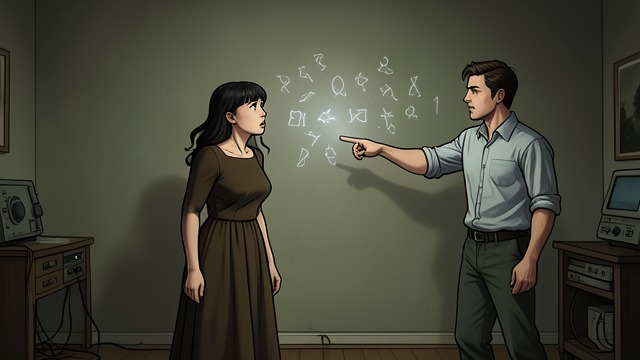
Language Without Context
Literal Hearing
Maggie interprets expressions such as “ears,” “ledges,” “snakes,” and “being in a pickle” as factual claims. Joe must continually translate ordinary speech into social meaning.
Humor as Translation
Their misunderstandings produce comedy, but they also show that language carries relationships beyond dictionary definitions. Maggie learns tone, gesture, and shared context slowly.
A New Linguistic Skill
Over time she begins recognizing sarcasm and even attempts it herself. The skill marks not just vocabulary acquisition, but participation in a community's imperfect system of implication.
The Literal Contract

Rules Against Evasion
Human Loopholes
Maggie treats agreements as exact structures, while humans rely on implication, intent, and practical custom. Her insistence on explicit terms exposes how often human contracts depend on shared assumptions.
The Agency Learns
Major Gordon Archer and Oliver Millington discover that formal wording is not harmless theater when dealing with an entity that can enforce it literally.
Joe as Interpreter
Joe repeatedly translates the emotional meaning behind human statements. His apparent simplicity gives him an unexpected advantage over professionals who use language strategically.
The Comic Truth

Sarcasm Becomes Affection
Early Incompatibility
Maggie initially rejects irony because she defines it as deception. Joe's jokes therefore appear dishonest or logically defective.
Gradual Recognition
Repeated exposure teaches her that obvious falsehood can communicate agreement, intimacy, or criticism. The meaning lies in the shared understanding rather than the literal sentence.
Emotional Fluency
By the final acts, Maggie can use sarcasm, teasing, and playful misdirection without abandoning honesty. Human language becomes a tool for affection rather than merely information.
first weeks of domestic life
during the first Agency negotiations
near the ending
